
Stephen Wheeler had spent years toying with camper vans, turning all sorts of weird and wonderful vehicles into mobile homes – there was a Suzuki microcar, a Vauxhall people mover, even a Ford Galaxy. Then one day, while glancing at his own Tesla Model 3, he spotted the wasted space above the swooping roof. Two years later after a 3,500 mile test run around Iceland, the Wheelhome Dashaway eCT rolled off the production line at his Lincolnshire factory. When you open the pop top and step inside, you’ll find a proper little home that can sleep two people in comfort, cook up a feast, and keep running for days on end without needing to be plugged in.
The Dashaway eCT measures 3.8 meters from end to end, 1.44 meters across and 1.1 meters tall when closed – small enough to park up beside the garden shed. To tow it, you can use almost any sort of car; a single axle and some clever suspension keeps the centre of gravity nice and low, even if you’re using a tiny 1.2 liter petrol engine as the tow vehicle. Unladen, it weighs 340kg, which leaves you plenty of room to stow 410kg of all your camping gear, water and any other essentials – after that you hit the 750kg limit. Colors for the side panels can be matched to your tow vehicle, and there’s an optional 170-litre front locker that can swallow up a couple of folding chairs, or even a week’s worth of groceries.
Getting it set up takes all of two minutes – just drop the back stabilisers, turn a few cranks on the handle and – voila – the gas struts lift the fibreglass roof up onto its supporting poles. Suddenly you’ve got 6 feet of headroom at the back and 5 feet up front. There’s a zip down door that lets in breezes and keeps the bugs out, with a full fly screen panel on the opposite side windows. The trailer stands ready on tarmac, gravel or grass, without needing any of the usual pegs or guy ropes.
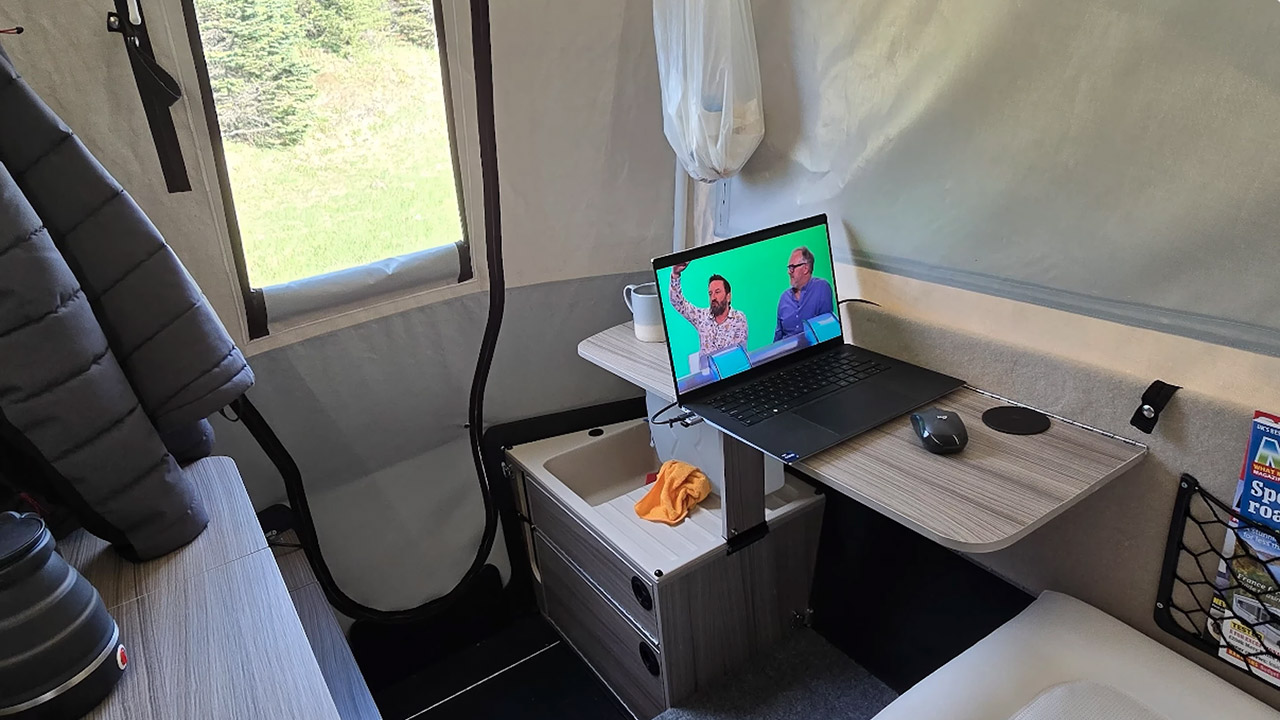
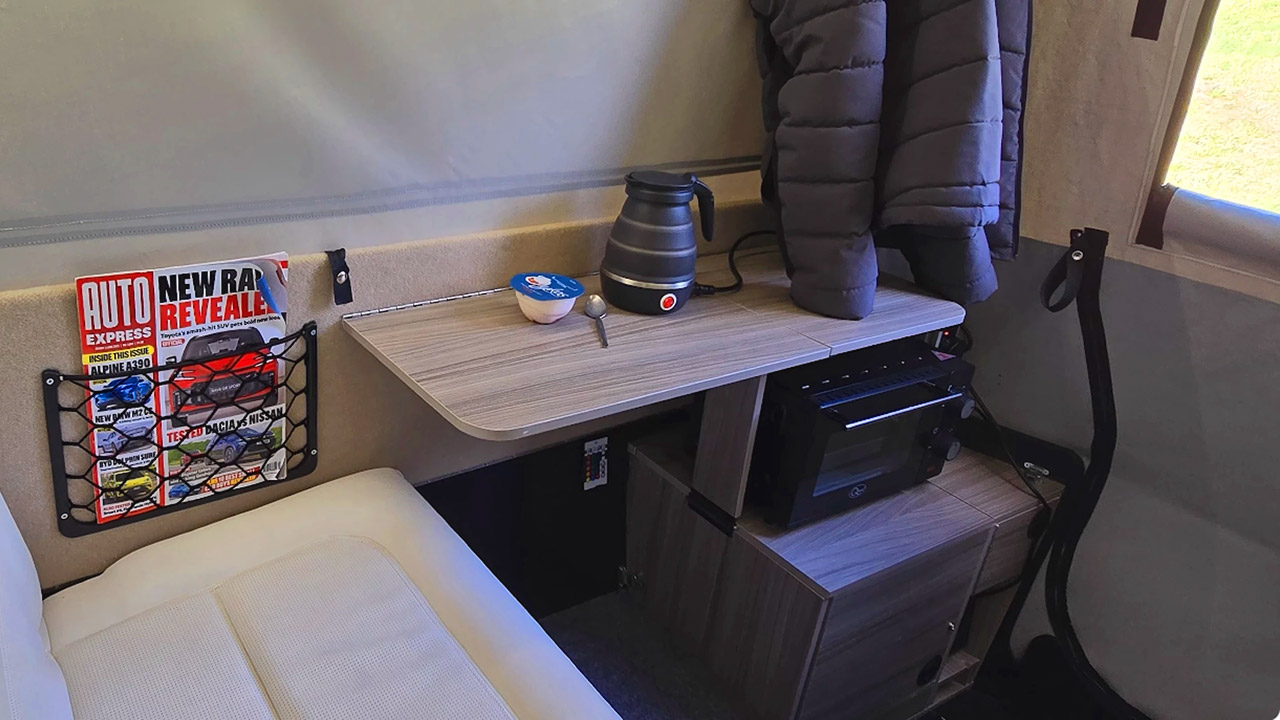
Inside, the layout is surprisingly spacious. Along one wall you’ll find a comfy two-seat sofa facing backwards – the cushions are nice and firm, the upholstery wipe-clean as a whistle, and there’s a fold-down countertop beside the sofa that converts into a big enough desk to take a 16-inch laptop. Lined up opposite the sofa is a stainless steel sink, complete with a drainer and a 10-litre water canister perched above it on a shelf. With a bit of a turn of the spout, gravity will start to deliver the water – and if you’d rather use a push-button tap, an electric pump is available.
Behind the sink, a pull-out drawer will store all your cutlery and pans, and then there’s the very handy optional extra – a conventional 200w solar panel on the roof (optional) that generates enough power to keep the lithium battery pack in the underfloor locker topped up. With a 2,600w inverter hooked up to the system, you can run a microwave, an induction stove, and a kettle all at the same time. And down in that same underfloor locker, you’ll find an 18-liter compressor fridge which should keep your milk nice and cool for three whole days without needing to be plugged in. With the optional second battery, the trailer is good for a week without needing a recharge.
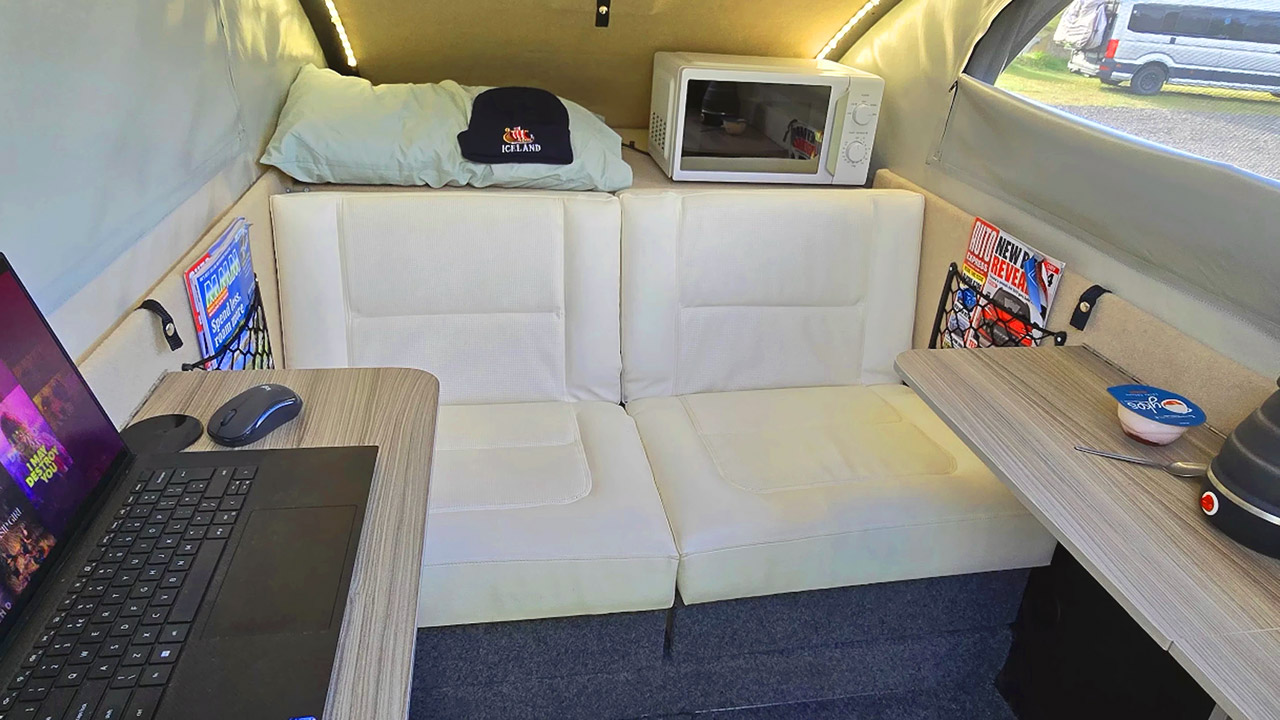
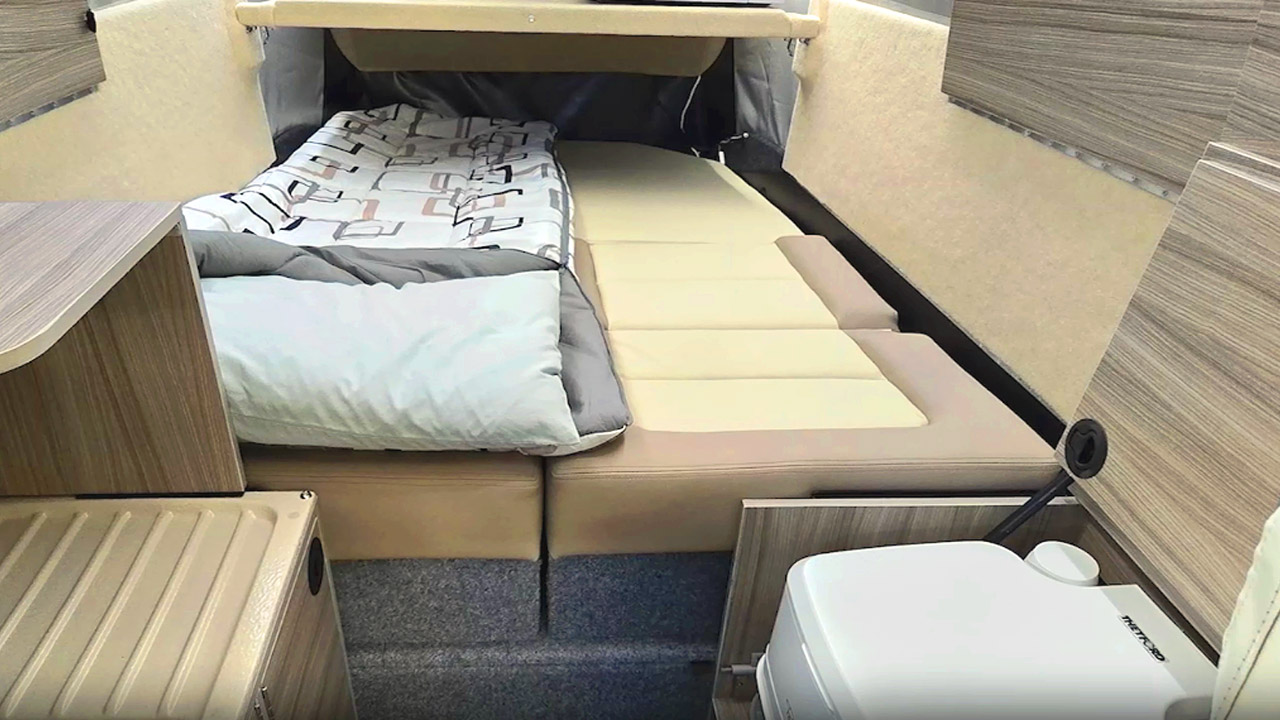
At night, the sofa base glides forward and the backrest folds in flat to form a 1.9 x 1.2 metre double bed – six foot three by four foot – which is more than spacious enough. When you’re on the move, you can just leave the bedding on the mattress and stash it up under the front shelf when you get back to the sofa’s normal state. A Porta-Potti gets stashed away in a cubby at the foot of the bed, convenient as you’d ever need – and you can even get to it when you’ve got the mattress all made up.
You’d think that would be the extent of the storage, but nope – lift the sofa cushions and you’ll find a massive, deep bin that’s perfect for stuffing duvets and other stuff. Under the floor in the middle of the floor is a locker that’s got room for the fridge, batteries and all sorts of dry bits and bobs to keep the essentials dry. When you fold down the back seats of the car, you can slide two big plastic crates through the pass through into the boot, keeping the clothes and groceries separate from the living space.
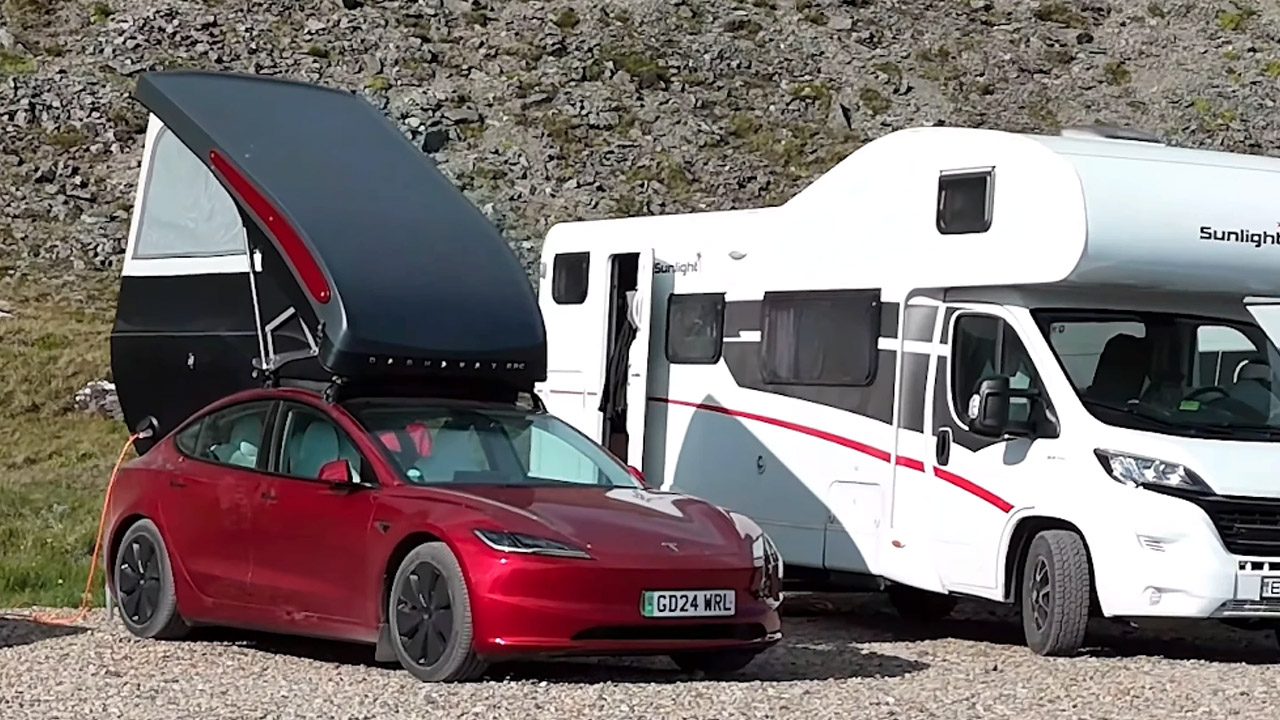
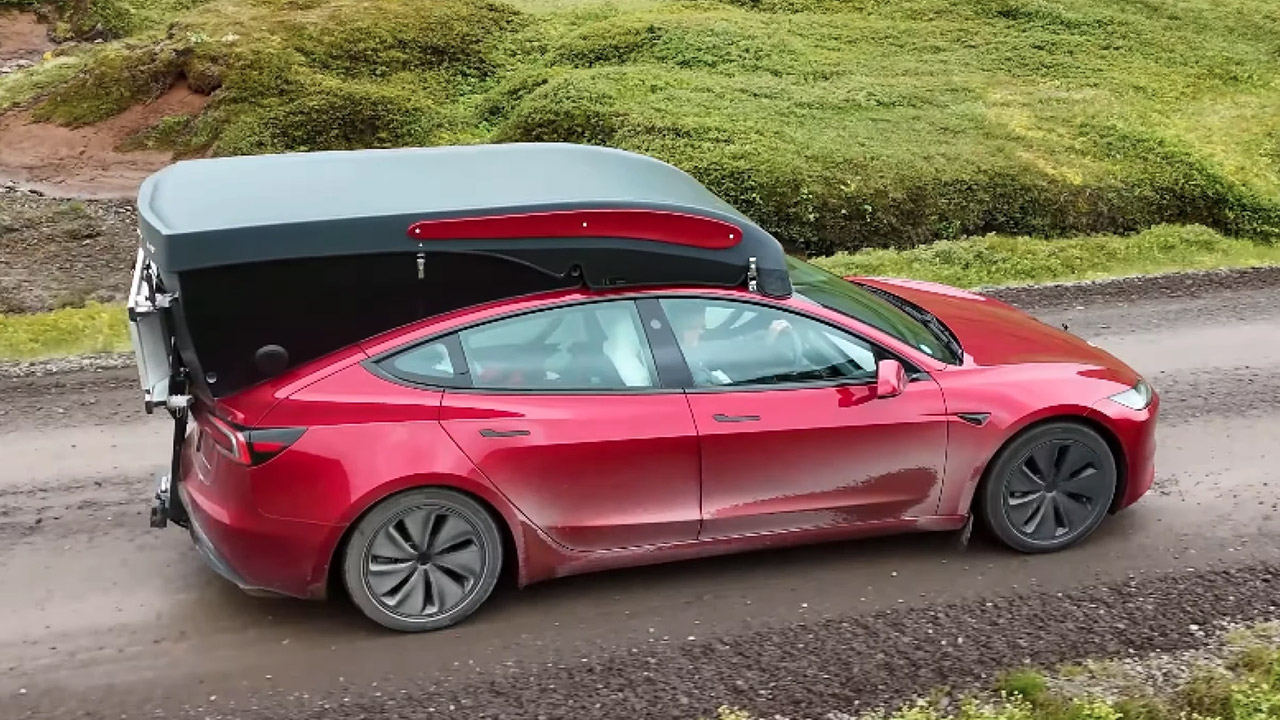
But then there’s the towing – and that’s where Wheeler got a real surprise when his 2024 model 3 long range averaged 308 watt-hours per mile at 60 mph with the trailer attached. And get this – that’s the exact same as the roof pod version he tested out last time round – which is pretty much a huge tick in the plus column. In real world terms, that comes out as 3.25 miles per kilowatt, or 244 miles of proper driving on a single charge – although that drops to 50 mph when you start to run low. On the other hand, petrol cars fair a lot better – a 1.0 litre Ford Fiesta managed a pretty respectable 42 mpg on a mixed trip.
Wheelhome build each of these units from scratch in the beautiful Lincolnshire countryside. The base price comes in at £26,225 which, handily, includes VAT and mainland UK delivery. Then there’s all the various extras you can add on – motor movers for easy towing, back awnings for a private little toilet nook, second batteries for keeping things going even when you’re off the grid… every single option just bolts on without having to change the trailer’s standard 340 kilo shell.
[Source]